✦aquascape to the moon
Field guide / 01

Find your
underwater language.

There is no single way to make a beautiful tank. Start with a style that moves you, then bend the rules until it feels like yours.

Eight styles / infinite worlds
Blue Mountains aquascape by Hakkai
01 / Landscape

Nature aquarium

Use wood, stone, and plants to suggest a scene you could wander through.

Meet the style ↘
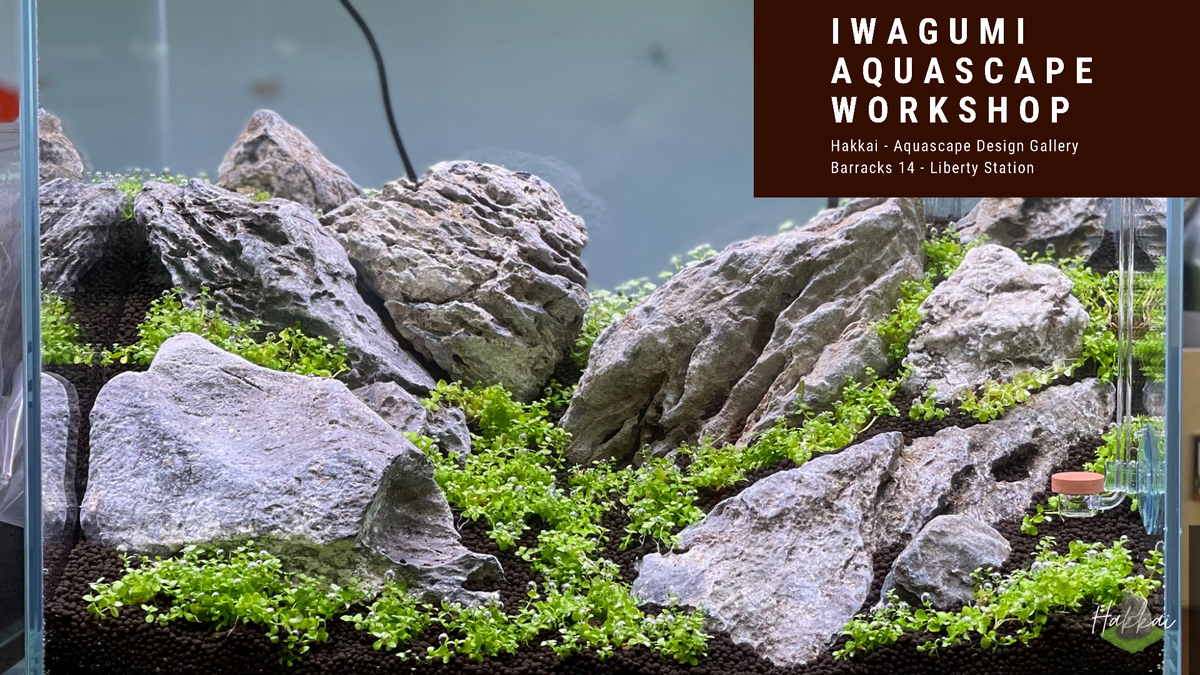
Stone-focused Iwagumi aquascape workshop image by Hakkai
02 / Stone

Iwagumi

Make space and stone placement the central composition.

Meet the style ↘
Dutch planted aquascape at Hakkai
03 / Plants

Dutch

Layer color, leaf shape, and trimmed stems into a living garden.

Meet the style ↘
Elderfall Refuge aquascape by Hakkai
04 / Abundance

Jungle

Invite a lush, generous mix of plant textures to take over.

Meet the style ↘
Biotope build by Hakkai
05 / Habitat

Biotope

Begin with a real place and the needs of its inhabitants.

Meet the style ↘
Pascal's Pond shallow aquascape by Hakkai
07 / Shallow

Pond tank

Think wide, open, and close to the water's surface.

Meet the style ↘
Wabi-kusa display by Hakkai
08 / Small world

Wabi-kusa

Gather aquatic plants into a living, sculptural island.

Meet the style ↘
Look closer

Choose a direction, then experiment.

These are creative starting points. The real craft is in adapting materials, plants, and care to the tank and animals you actually keep.

01 / NATURE AQUARIUM

A landscape in glass.

Nature style uses a strong hardscape and a clear sense of depth. The goal is the feeling of a place, rather than a literal copy of one.

  • Start with one focal direction.
  • Use scale to make the tank feel deeper.
  • Leave room for plants to grow into the composition.
Blue Mountains aquascape by Hakkai
02 / IWAGUMI

Stone, space, and rhythm.

Iwagumi puts the relationship between stones at the center. A restrained plant palette lets their forms stay visible.

  • Choose stones that feel like one family.
  • Vary height and angle for movement.
  • Use open space as part of the design.
Hakkai Iwagumi workshop stone layout
03 / DUTCH

A garden made of stems.

Dutch style relies on plant groups, contrasting leaf shapes, and deliberate trimming. Color and texture do the composing.

  • Plan plant groups before planting.
  • Contrast shape, height, and color.
  • Expect regular trimming to keep the pattern clear.
Dutch aquascape at Hakkai
04 / JUNGLE

Let the plants roam.

Jungle style celebrates abundance: layers of leaves, roots, and organic growth that feel a little wild.

  • Mix broad and fine textures.
  • Keep a few visible pathways for the eye.
  • Let growth create character over time.
Elderfall Refuge by Hakkai
05 / BIOTOPE

Begin with a habitat.

Biotope design takes inspiration from a specific natural environment and puts its inhabitants first. Research is part of the art.

  • Choose a place or habitat to study.
  • Match materials and water conditions thoughtfully.
  • Design around the animals' needs.
Biotope aquascape build by Hakkai
06 / PALUDARIUM

Two worlds at the waterline.

A paludarium includes both aquatic and terrestrial zones. The transition between them becomes the focal point.

  • Decide where land meets water.
  • Plan for the different moisture needs of each zone.
  • Use roots and stone to connect them visually.
Compact paludarium by Hakkai
07 / POND TANK

Room to breathe.

Shallow water and a broad footprint give pond tanks a calm, open feel. The surface becomes part of the view.

  • Build a low horizon.
  • Use negative space to show the water.
  • Think about the view from above as well as the front.
Pascal's Pond by Hakkai
08 / WABI-KUSA

A living little island.

Wabi-kusa gathers plants and moss into a compact planted form. It can be displayed alone or used as part of a larger layout.

  • Choose plants suited to the display conditions.
  • Make the planted form the center of attention.
  • Keep the arrangement simple enough to maintain.
Wabi-kusa display by Hakkai